Designing and manufacturing a parallelized integrated satellite ground station for GOES series satellites
Skills: CAD, TIG Welding, Waterjet, Plasma & Laser Cutters, Vacuum Forming, Analysis
Collaborators: Aaditya Rao, Charlie Sands, Joseph Vazhaeparampil
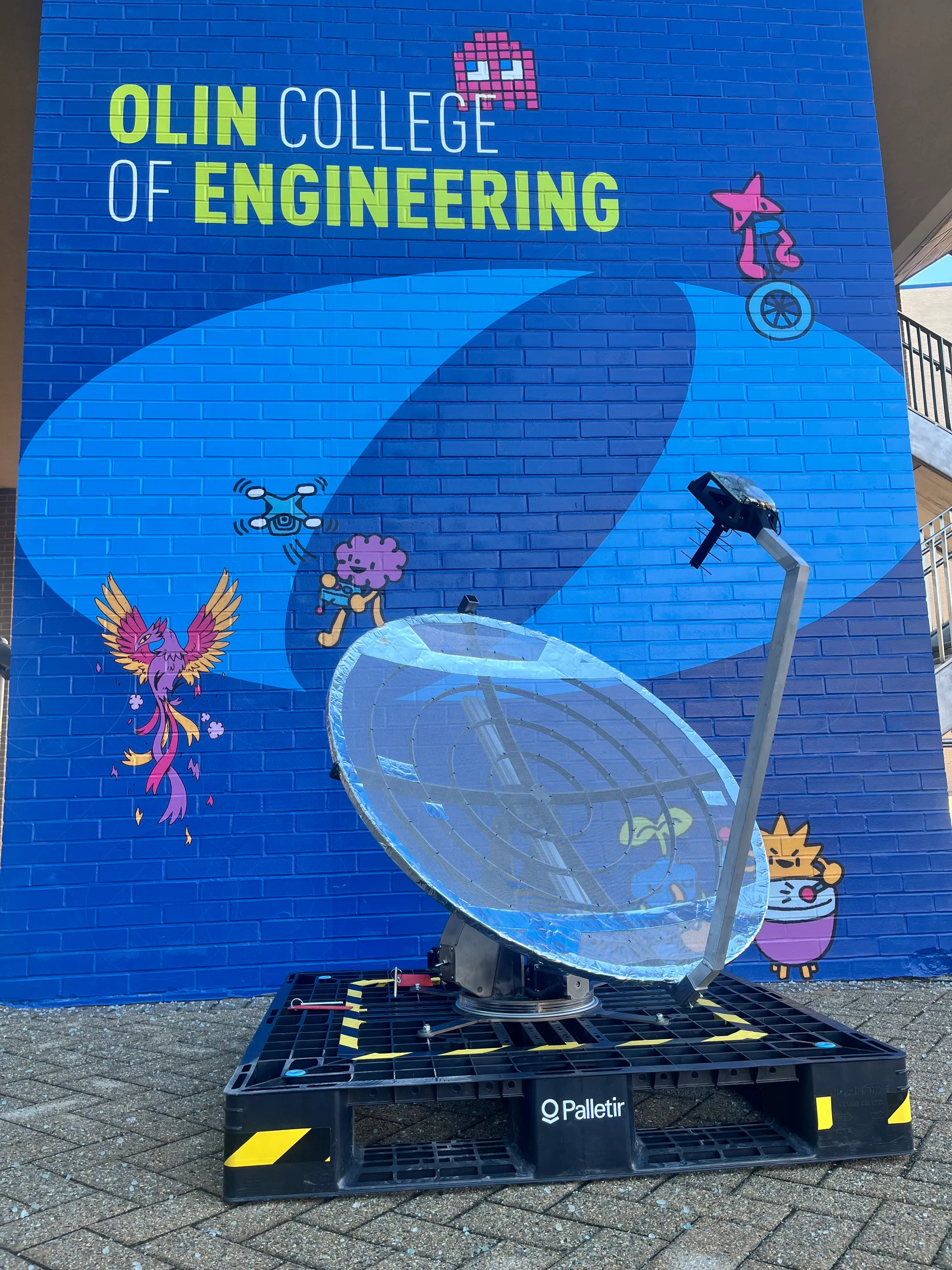
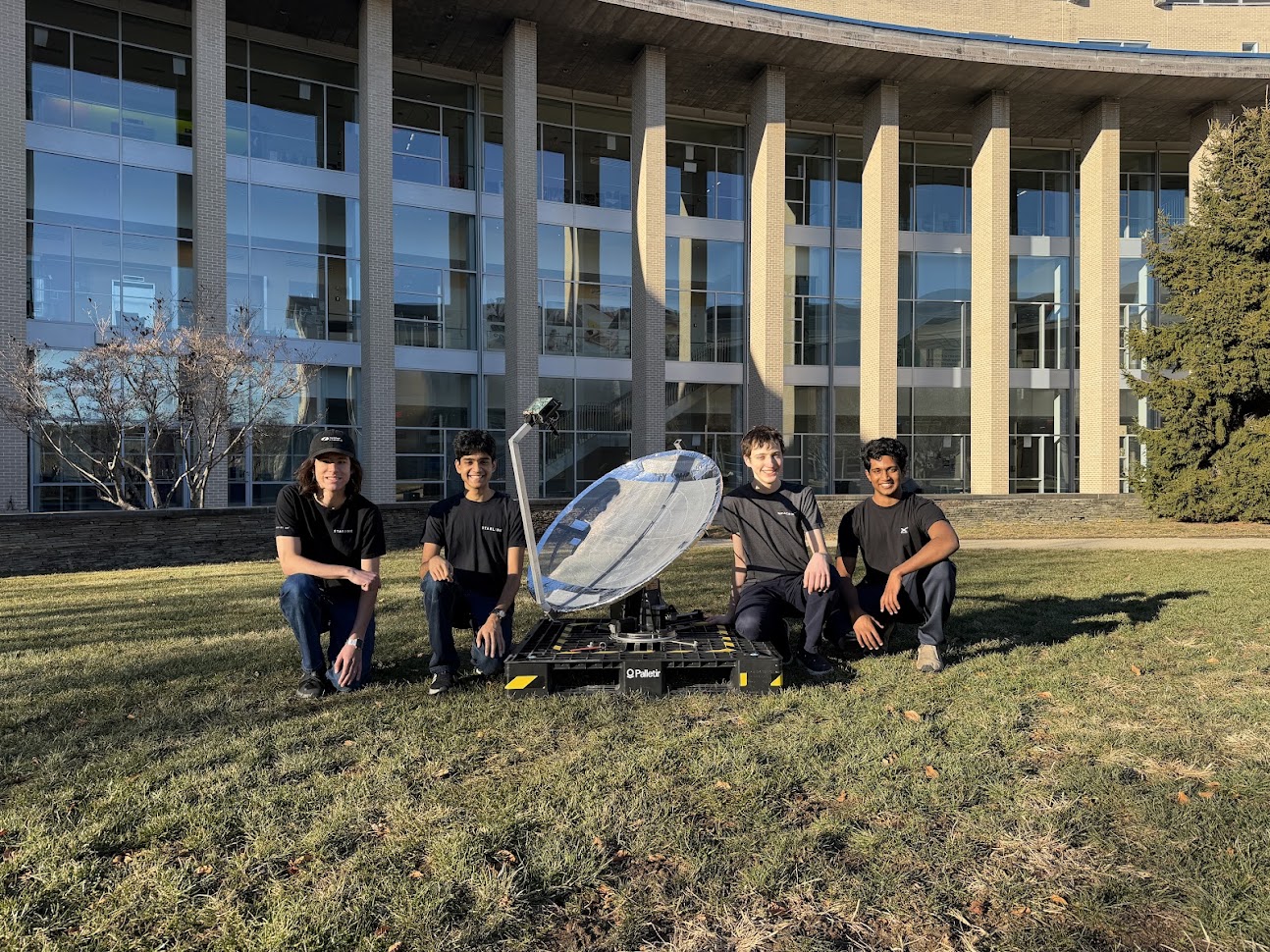
As part of Olin's second-year Principles of Integrated Engineering (PIE) course, a group of three friends and I were put in a group, given a budget, and tasked with the open-ended requirement of making some integrated system that involved both mechanical and electrical systems. We decided to build a satellite tracking ground station to recieve data from L-band weather satellites from scratch. The team was composed of an electromechanical engineer, an RF engineer, a software engineer, and myself, the mechanical engineer.

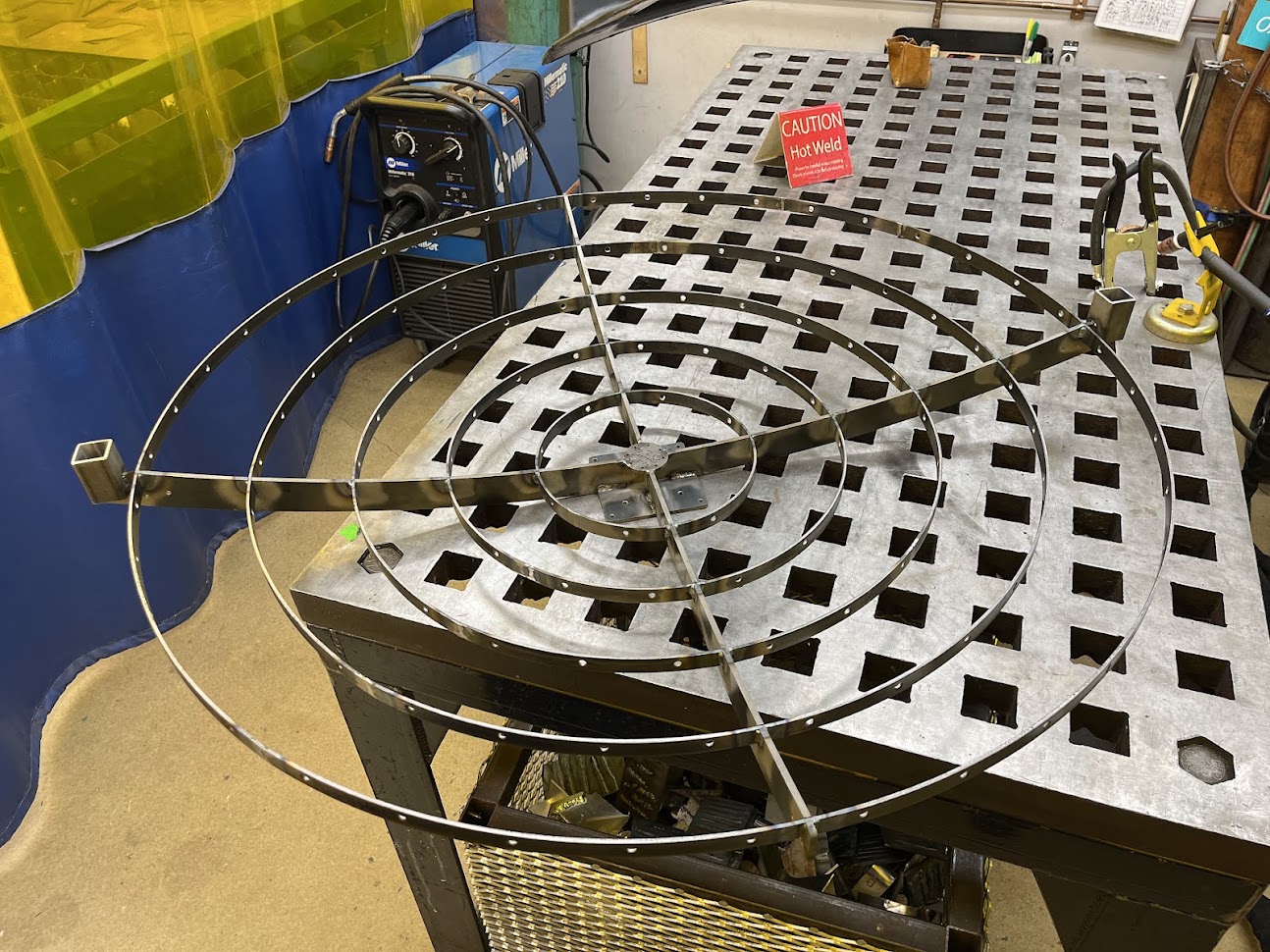
The reflector itself was one of the higher-risk elements of the design, so I prioritized its design and manufacturing a functional prototype. This unblocked the RF subsystem developement such that mechanical and RF progress could continue in parallel. I collaborated with the RF engineer to determine the specifications that the reflector had to meet, both in terms of size and precision. I designed it to consist of a series of concentric circles offset along a parabola.

The second reflector prototype built on the first, this time integrating a feed arm as well as switching the material to laser-cut plywood. This allowed us to form aluminum screen over the structure and form it into the parabolic shape of the reflector. This prototype integrated VESA mounts for both the reflector and feed arm mounts, which allowed it to be attached to a monitor arm during RF testing before the mechanical pointing systems were ready.

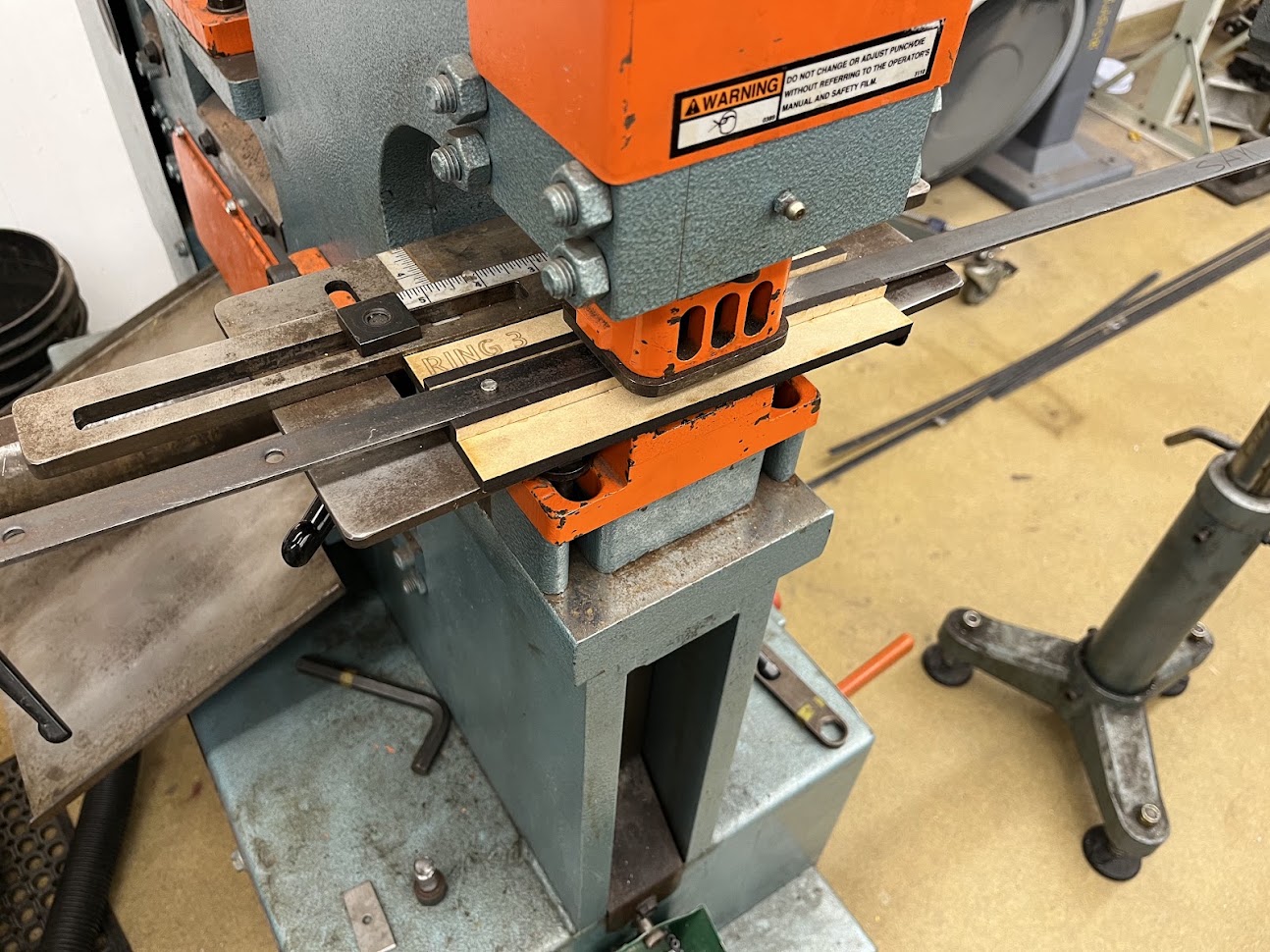
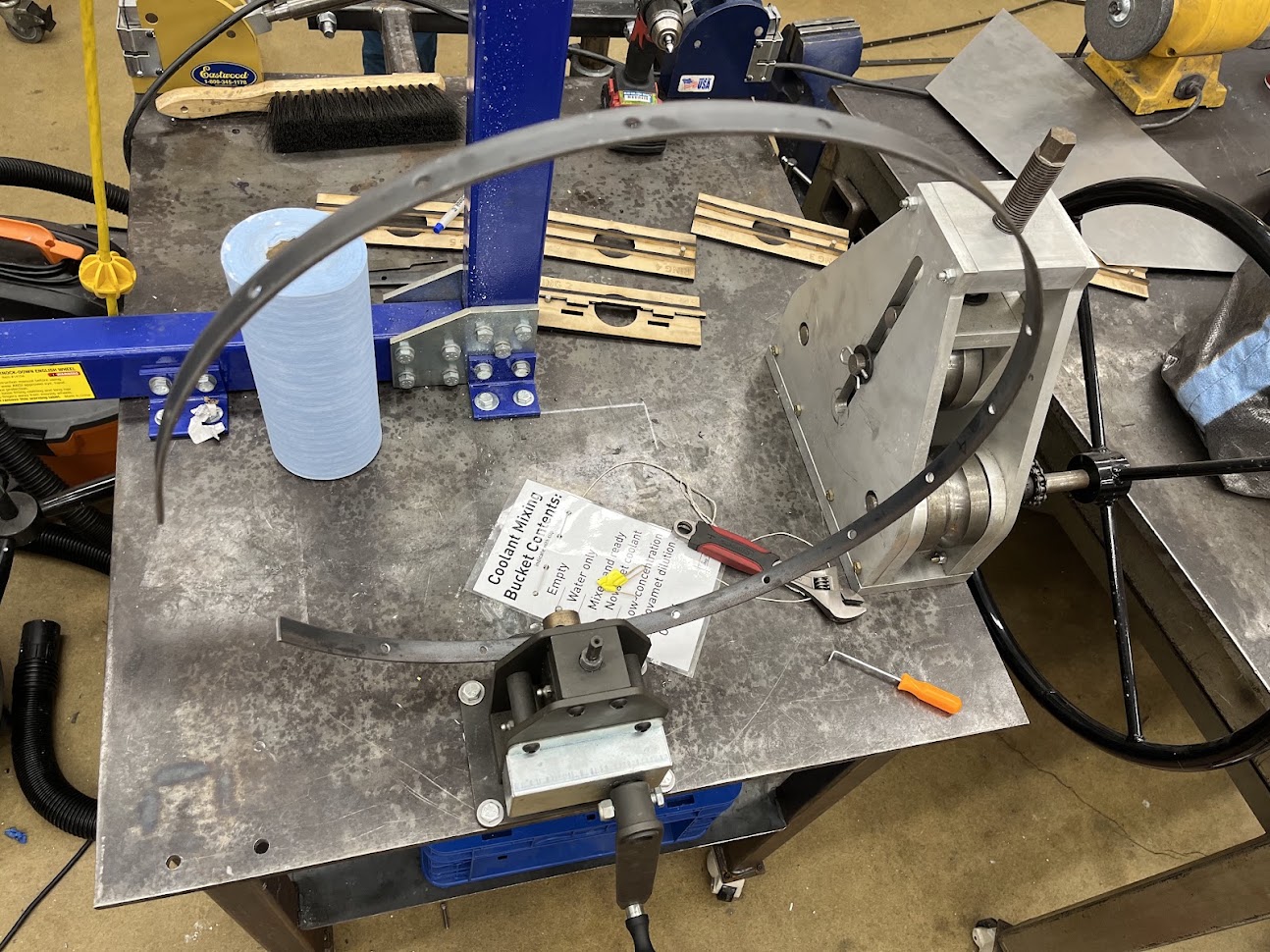
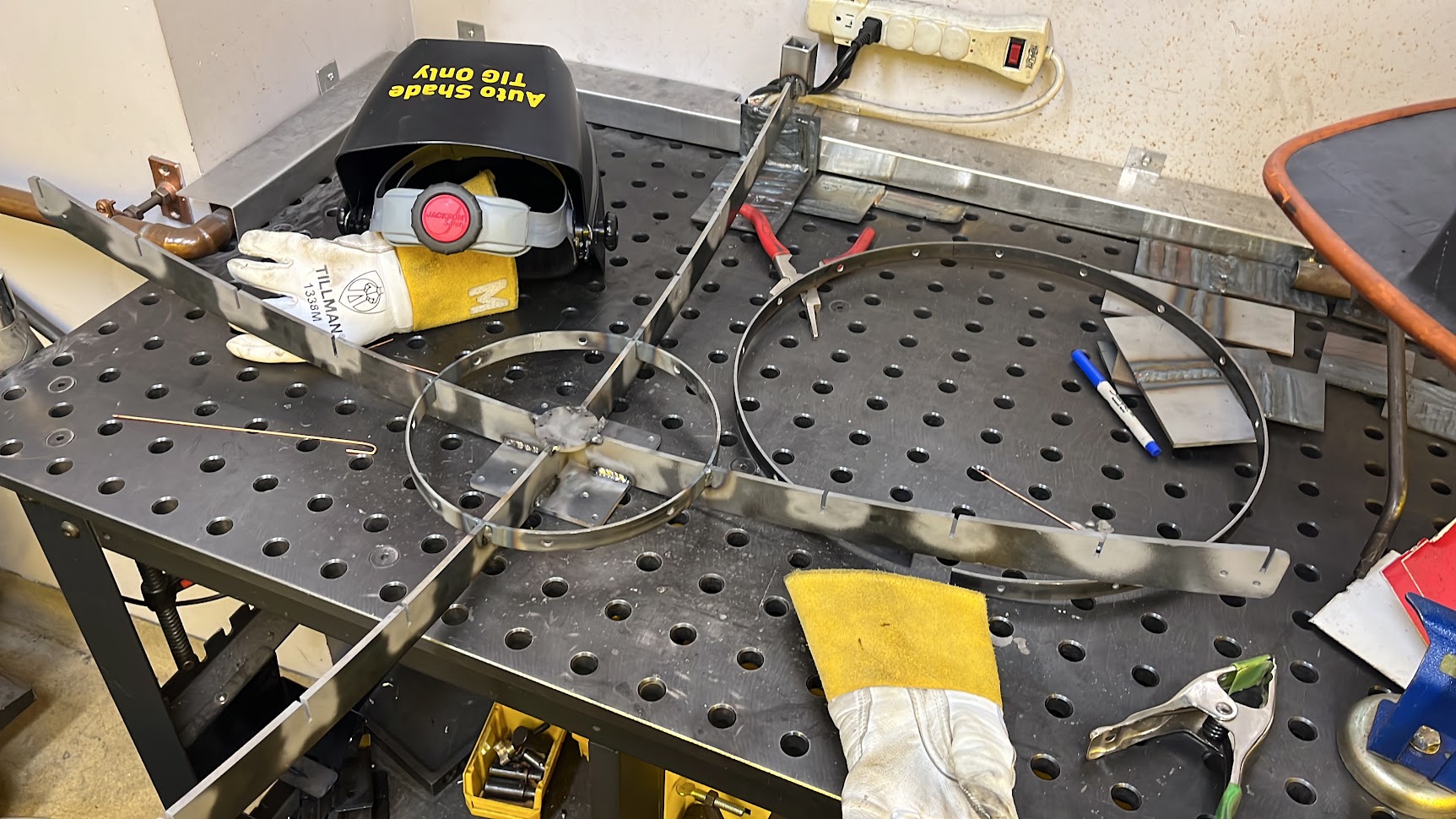
Following the acceptance of the second prototype in RF testing, I began manufacturing the final iteration. The final design used waterjet cut parabolic supports, with rolled strips of steel forming the circles. This change in the orientation of the circles was done for ease of manufacturing and did not impact the geometry or performance of the reflector. I designed a set of jigs to punch regularly spaced holes in each ring, which created the tie down points to attach the mesh to.
I then TIG welded the structure together and the wings into place. Everything notched together with joints for alignment, which made fixturing very straightforward. While final feed arm would only attach in one location, I designed the structure to be future-proof with two feed arm mounts and holes to attach additional hardware.
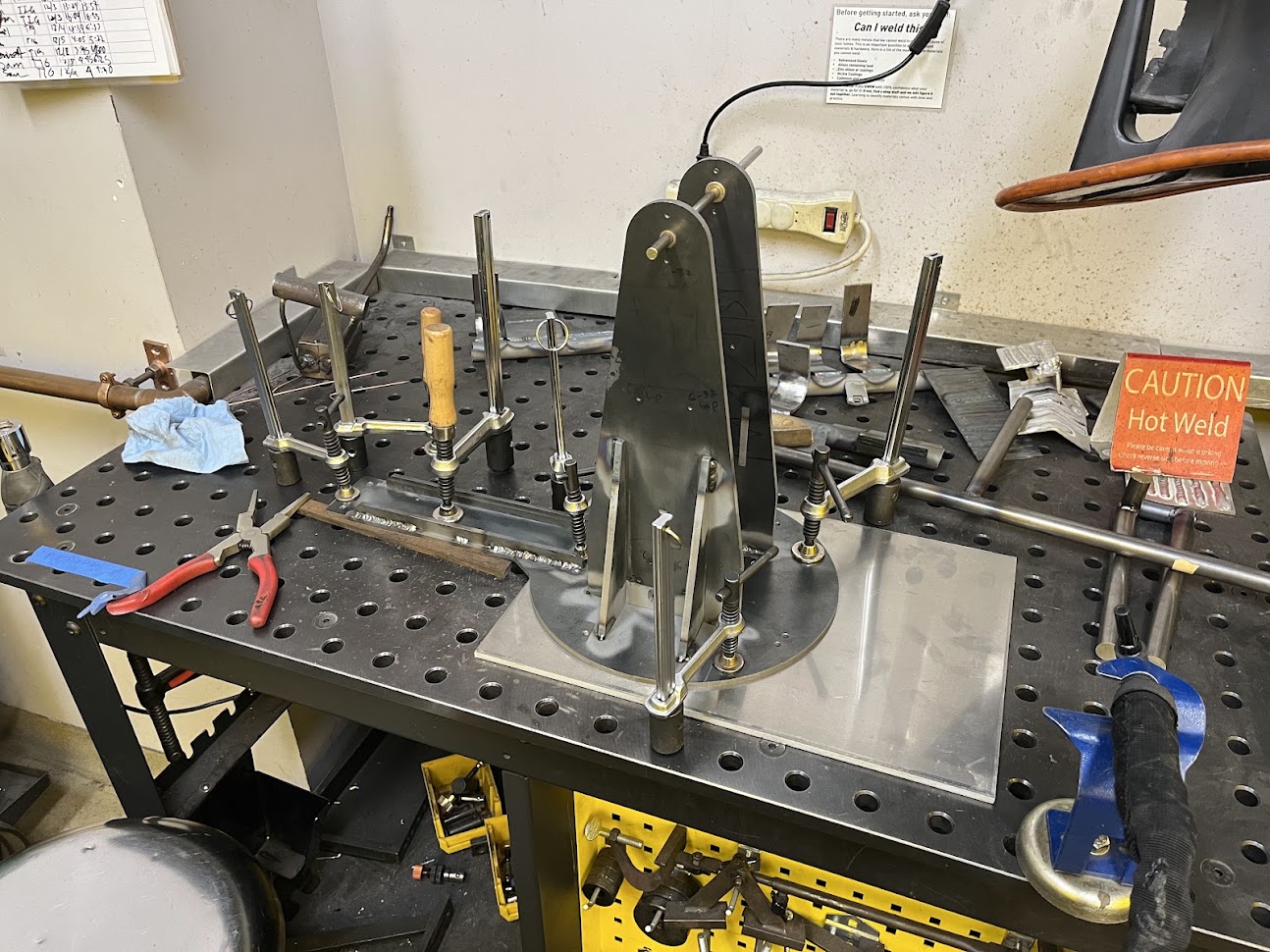
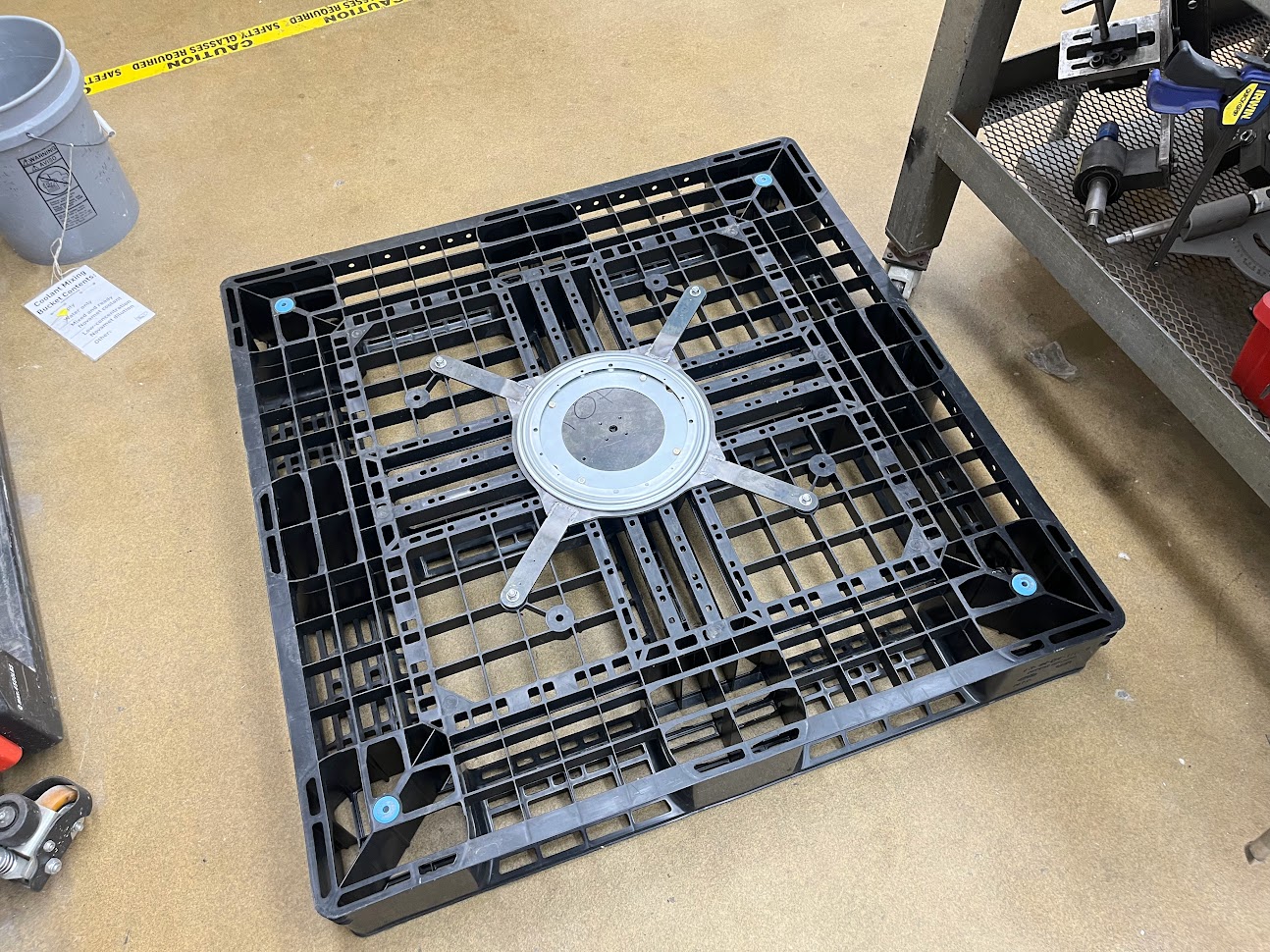
In addition to the reflector, I was also responsible for the design and manufacture of the azimuth pointing mechanism. From an electrical design perspective it was desireable to have the motor on the rotating component of the ground station, so I designed the azimuth mechanism as a planetary belt system with a slot tensioner. This gave the required reduction from the motor in a compact and protected form factor, with the mechanism sitting within a thrust bearing that supported the remainder of the ground station. I did analysis on all of the mechanisms to ensure that the required angular precision could be obtained and that the motor would have sufficient speed for proper tracking. As the planetary belt system was possible to backdrive, I ensured that the motor would have sufficient holding torque even in cases of high winds on the reflector and included a locking pin for transport.

The azimuth base was waterjet in five parts to save material, which I then welded together. This base was the surface to which the thrust bearing and stationary pulley bolted to, as well as the component that affixed the ground station body to its pallet. The upper plate of the mechanism supported the ball screw and pivot for the elevation axis, as well as mounting the tensioner for the azimuth planetary belt. Everything was designed to slot together for welding.
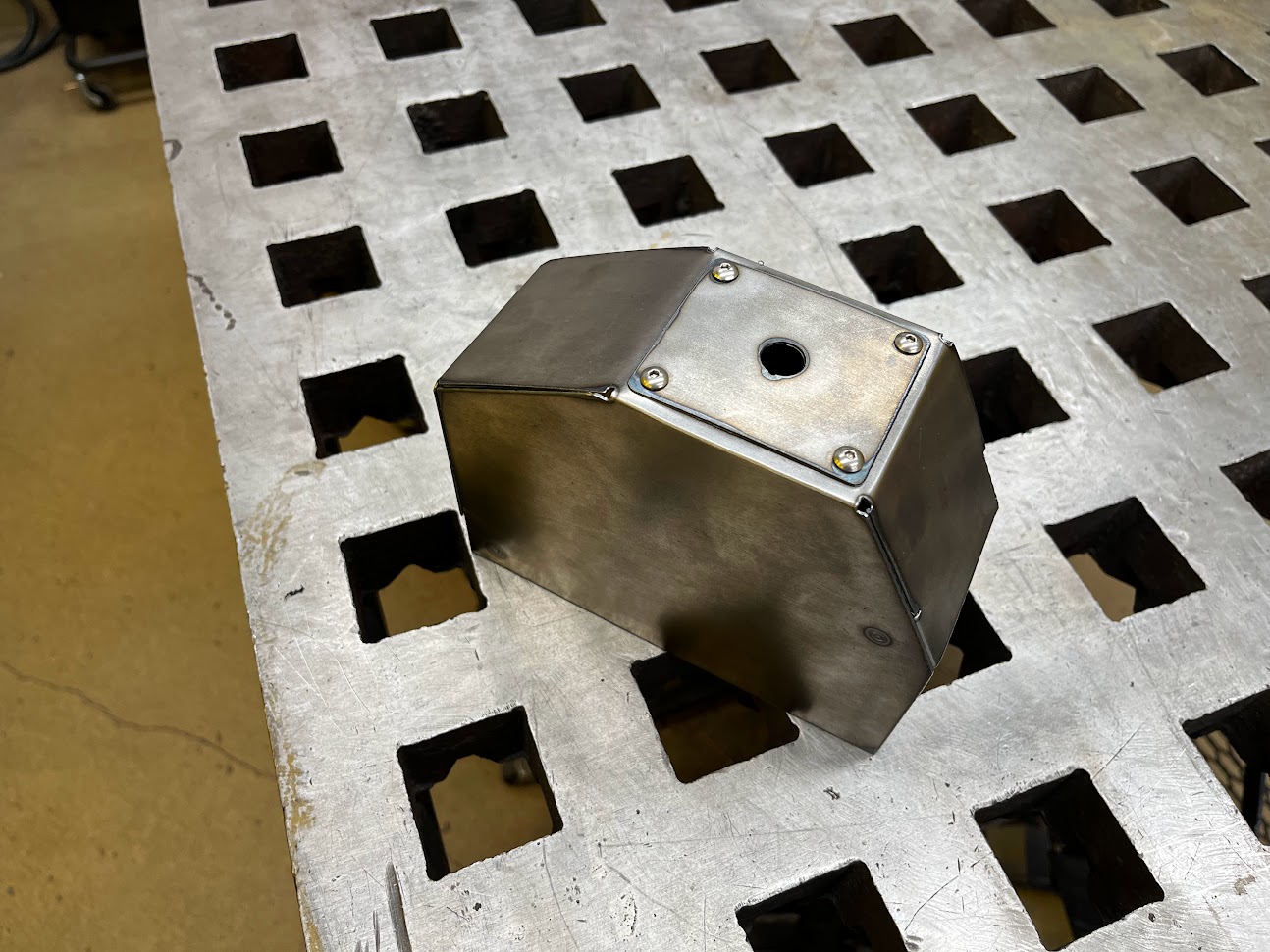
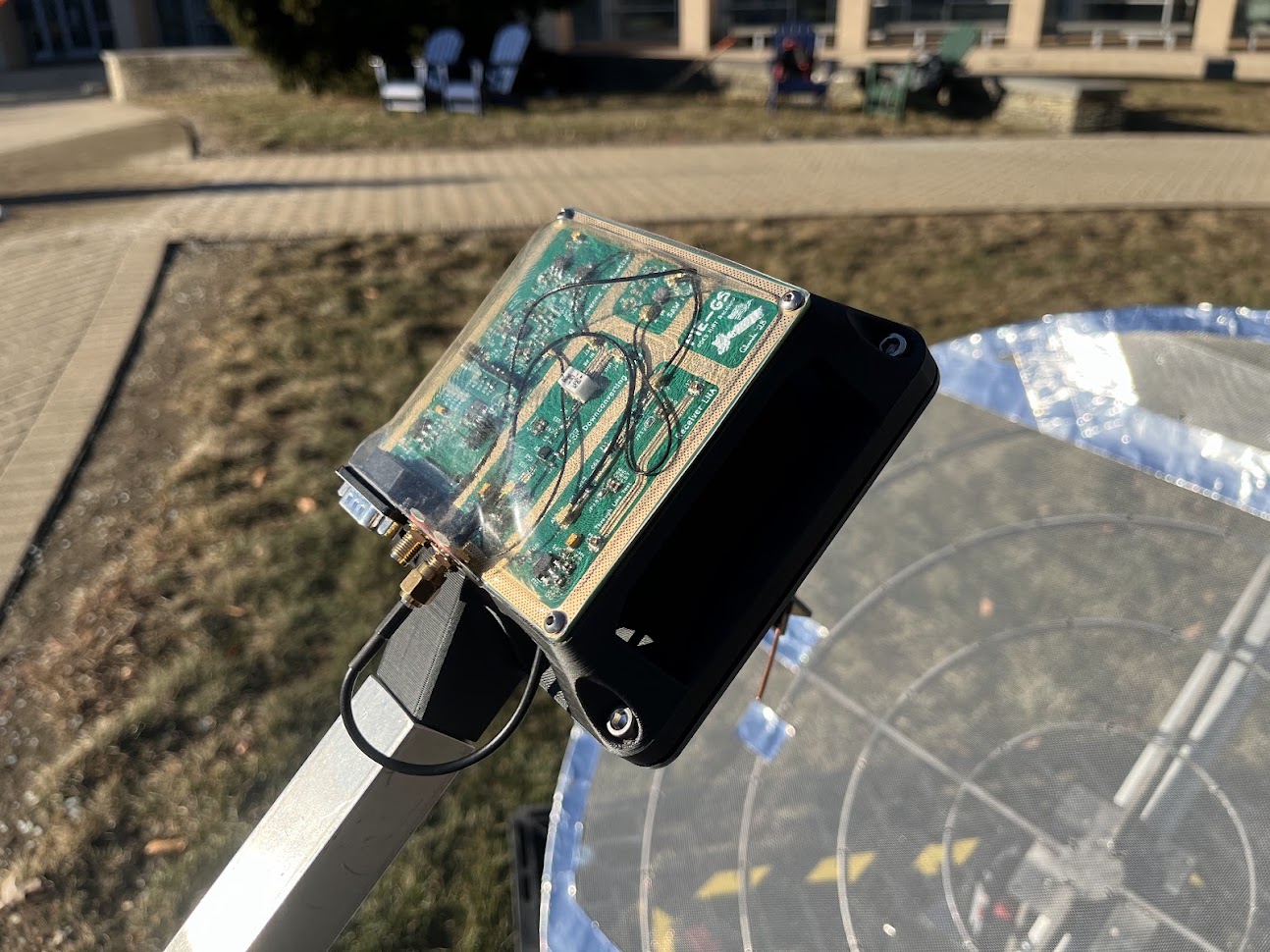
A couple of other parts I worked on include the feed arm as well as the electronics enclosure. The electronics enclosure was plasma cut and then bent with sheet metal tools. I TIG welded the aluminum feed arm and vacuformed the RF board cover.


We gradually integrated components as they were completed, replacing prototype components with final ones and testing along the way. After many late nights and lots of testing, we were able to target and downlink data from GOES weather satellites. Below are some images that we recieved from space.
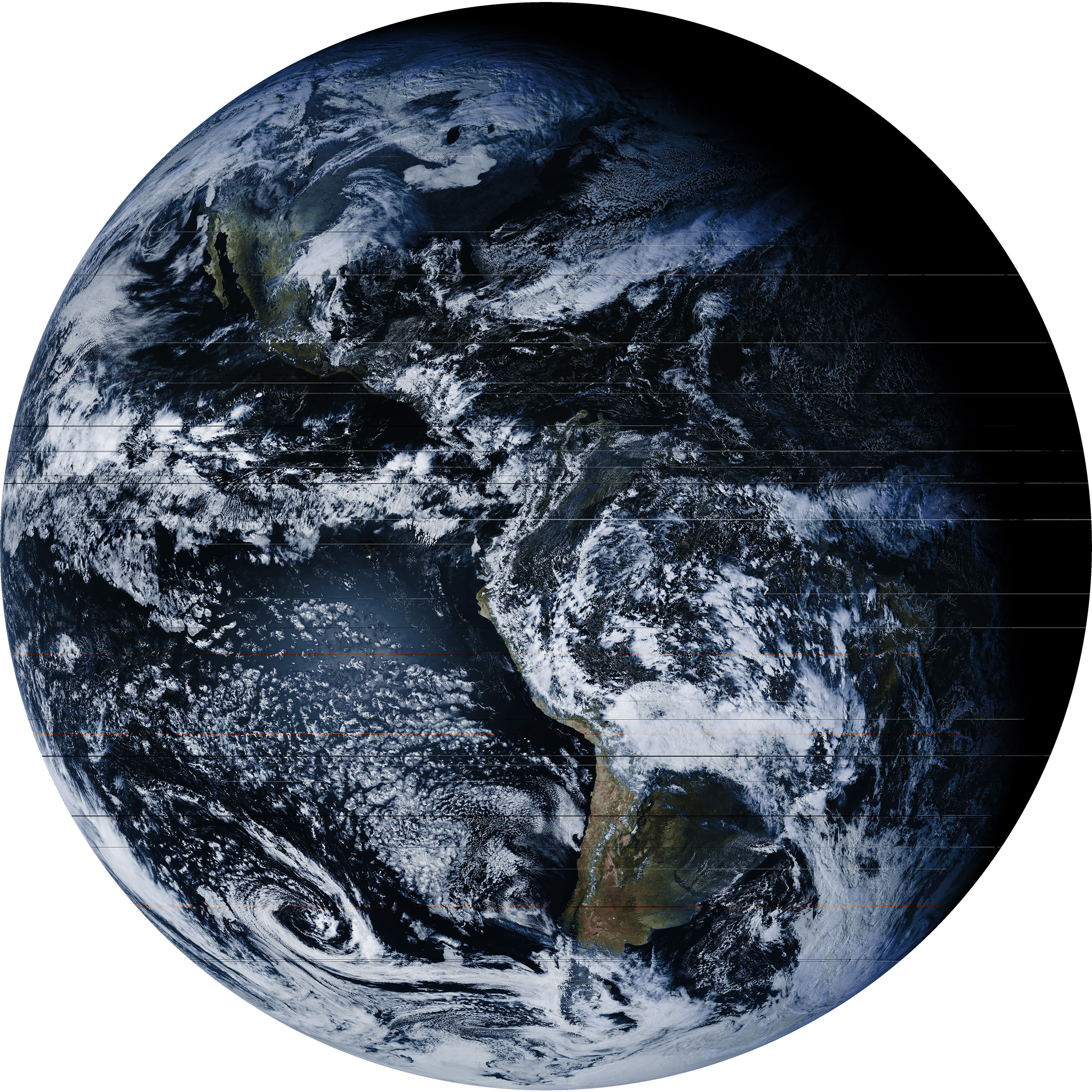
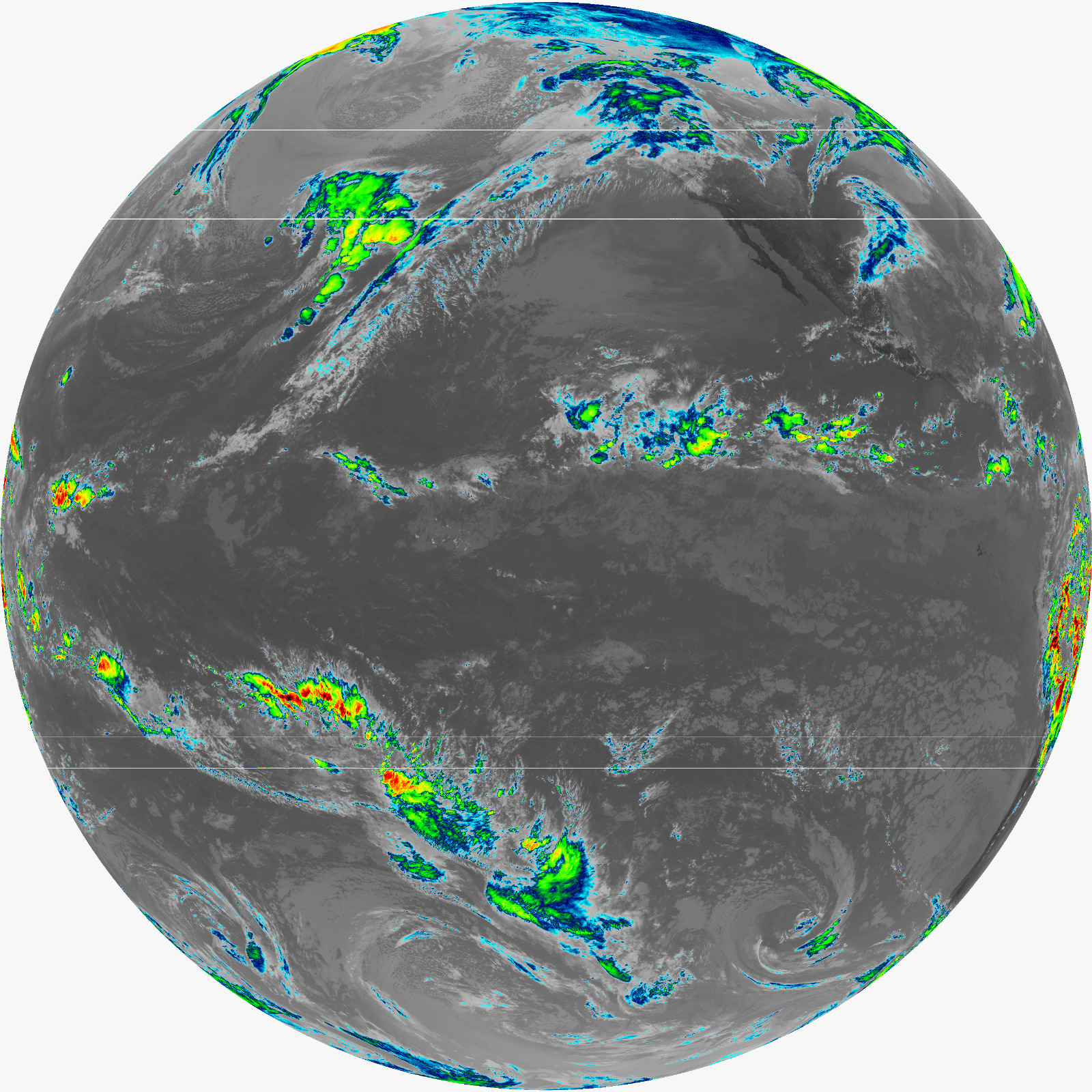
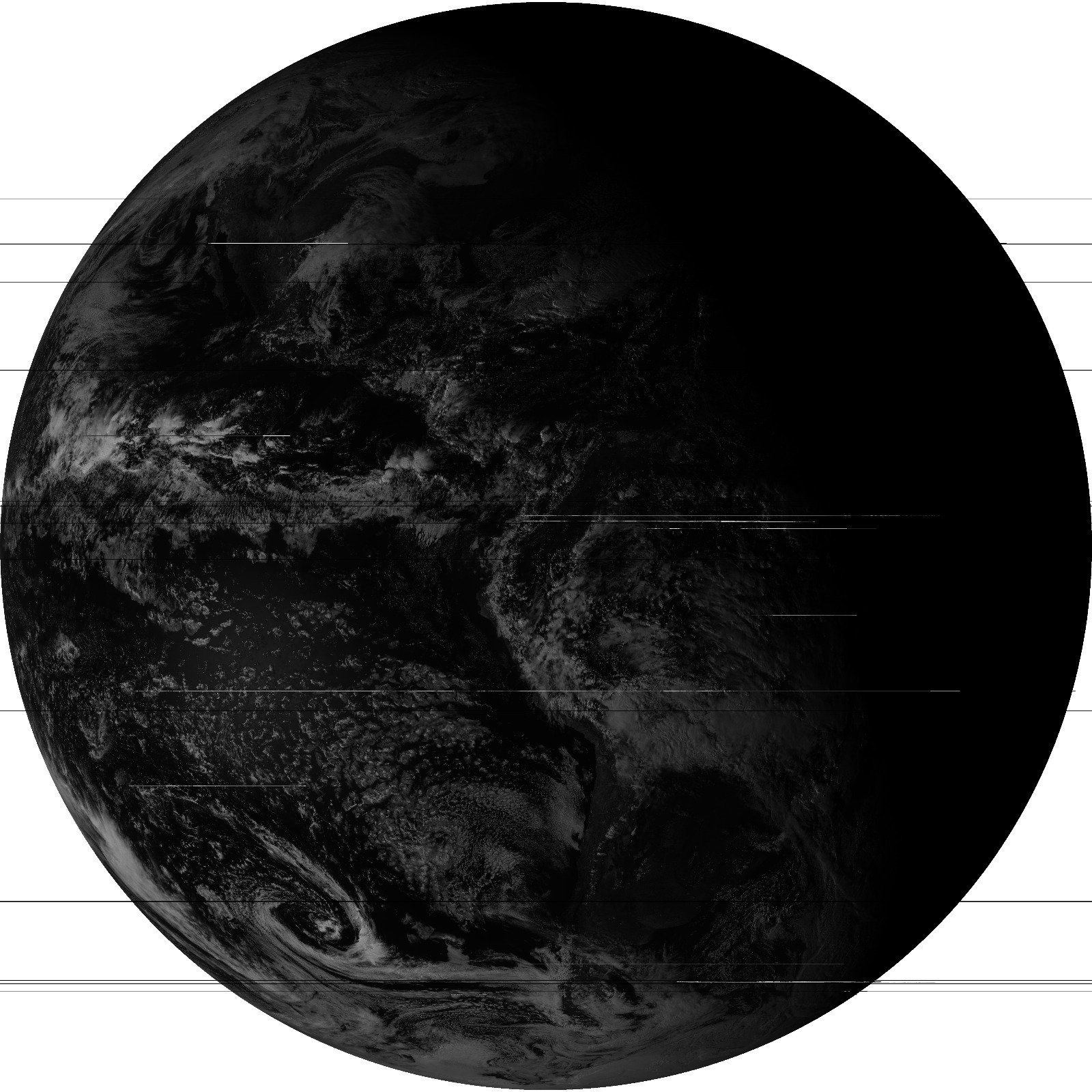
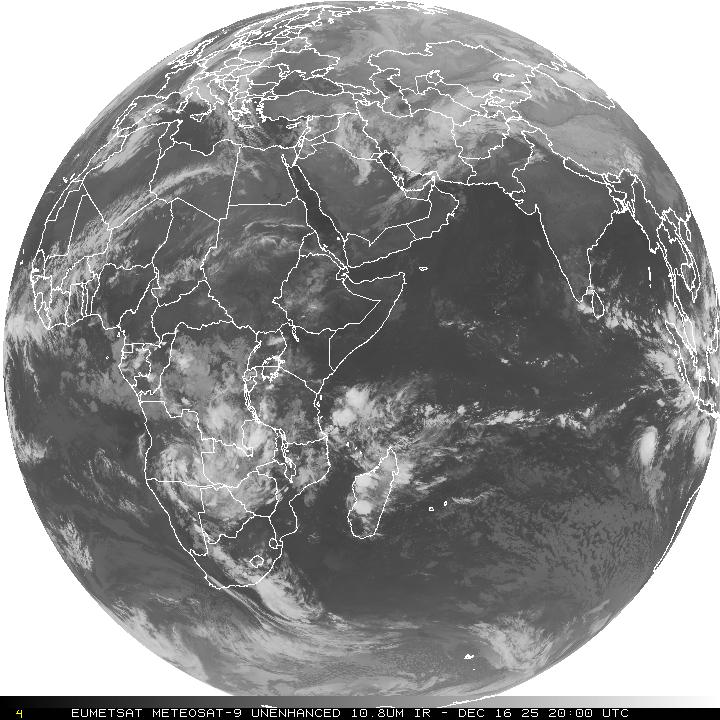
This was an awesome project and a great learning experience working with a motivated group with such a diverse skillset. In addition to growing my mechanical design skills I also gained significant experience doing subsystem integration and co-designing requirements with other stakeholder teams.