

Skills: Mill (CNC), Lathe, Waterjet, Plasma Cutter, Laser Cutter, Resin/FDM 3D Printing, Composites, CAD
Olin Rocketry is an entirely student-led project team working to build high-power rockets. I joined the team in 2024 as a propulsion engineer and am now the propulsion sub-team lead. My work thus far has been primarily focused on the development of the team's APCP solid rocket motors, although I also do composites in my work on the structures sub-team.
.jpg)
A recent project of mine was the design and fabrication of a custom bulkhead to integrate solid rocket motors onto our newly built motor test stand. This component is designed to connect COTS motor casings to our pressure transducer so that we can monitor the chamber pressure within the rocket motor. This allows us to collect data which is used to characterize our propellant and design experiments with different rocket nozzle geometries.
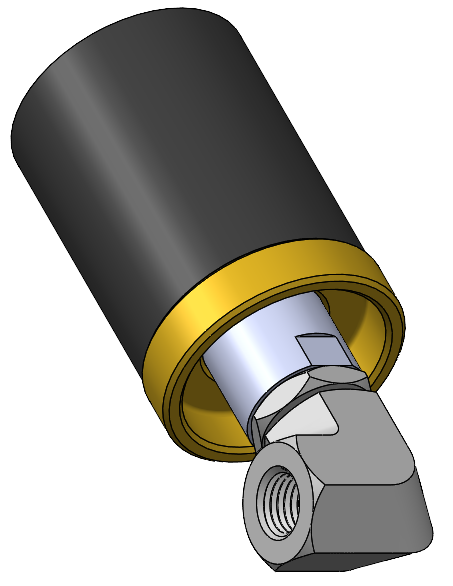
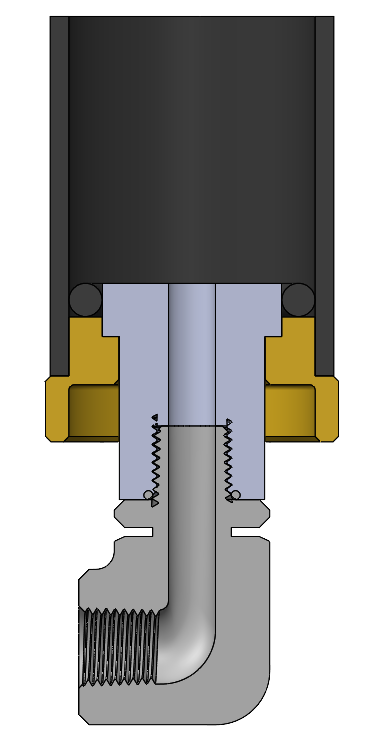
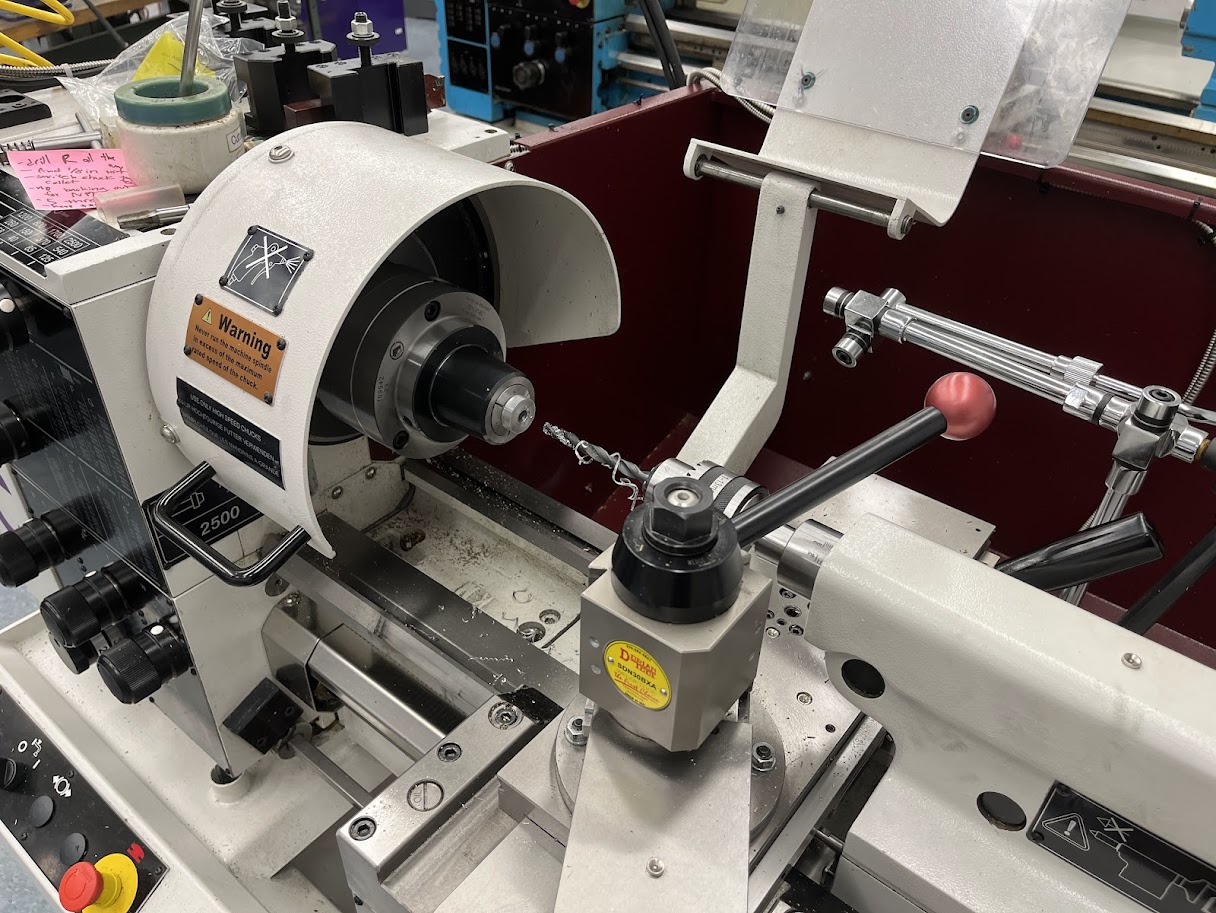
I designed this system in SolidWorks, and after a number of design reviews machined it out of aluminum. I used both a lathe and a mill to machine the part out of bar stock. One end is threaded with a boss port fitting to connect to our PT fitting stackup, while the other end sits inside the COTS motor retention ring. I also tapped the internal end to fit an NPT fitting so the part can be pneumatically or hydrostatically leak decay pressure tested.
After the part was machined, I performed a pneumatic leak decay test. The pipe is filled with oil during the static fire to protect the sensor from the intense heat of the combustion chamber. The piping connects to the custom bulkhead using the in-house machined boss port. It was important to confirm that this boss port was machined correctly prior to testing to ensure accurate data collection.
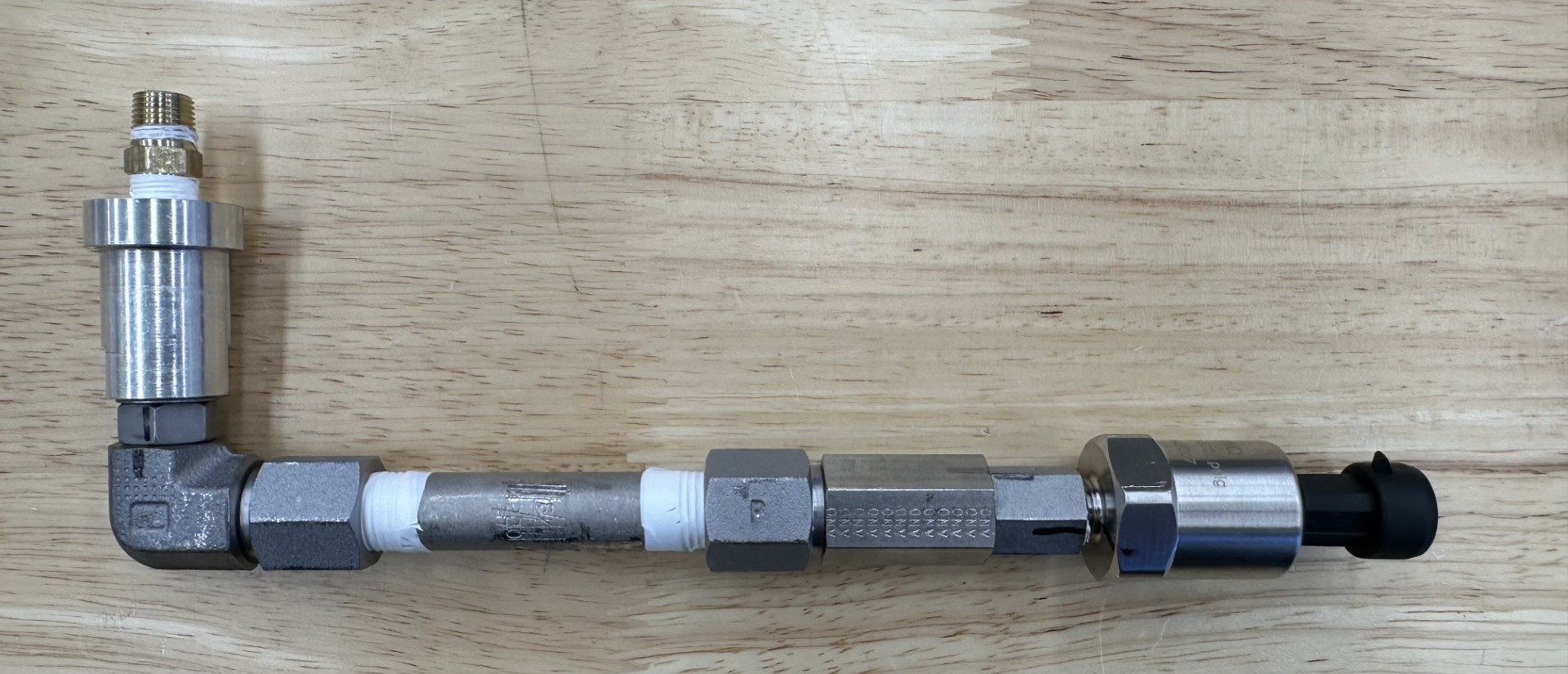
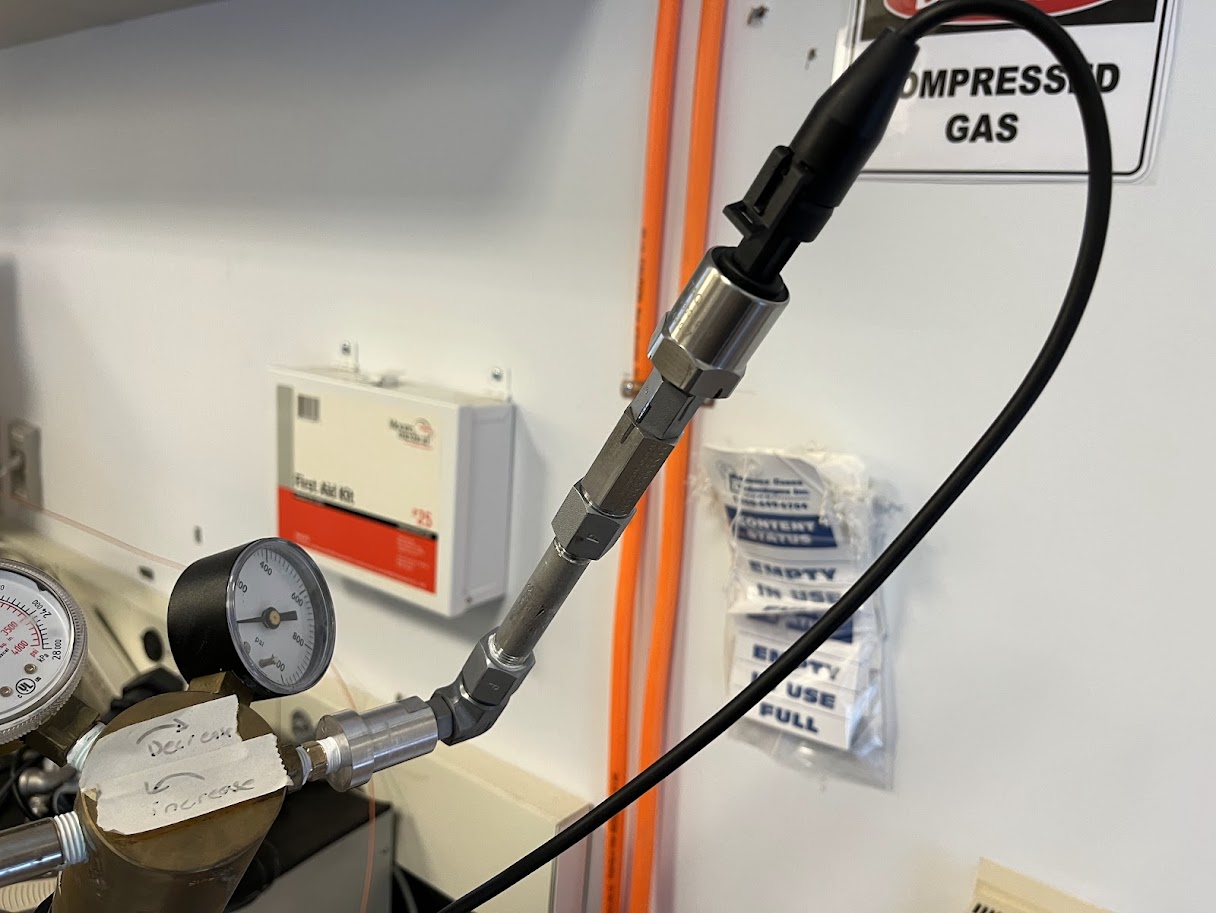
For the pneumatic test, we pressurized the system to 1000psi and performed a 5 min leak decay check. Data was recorded from the PT while we snoop tested the assembly to ensure there were no leaks.
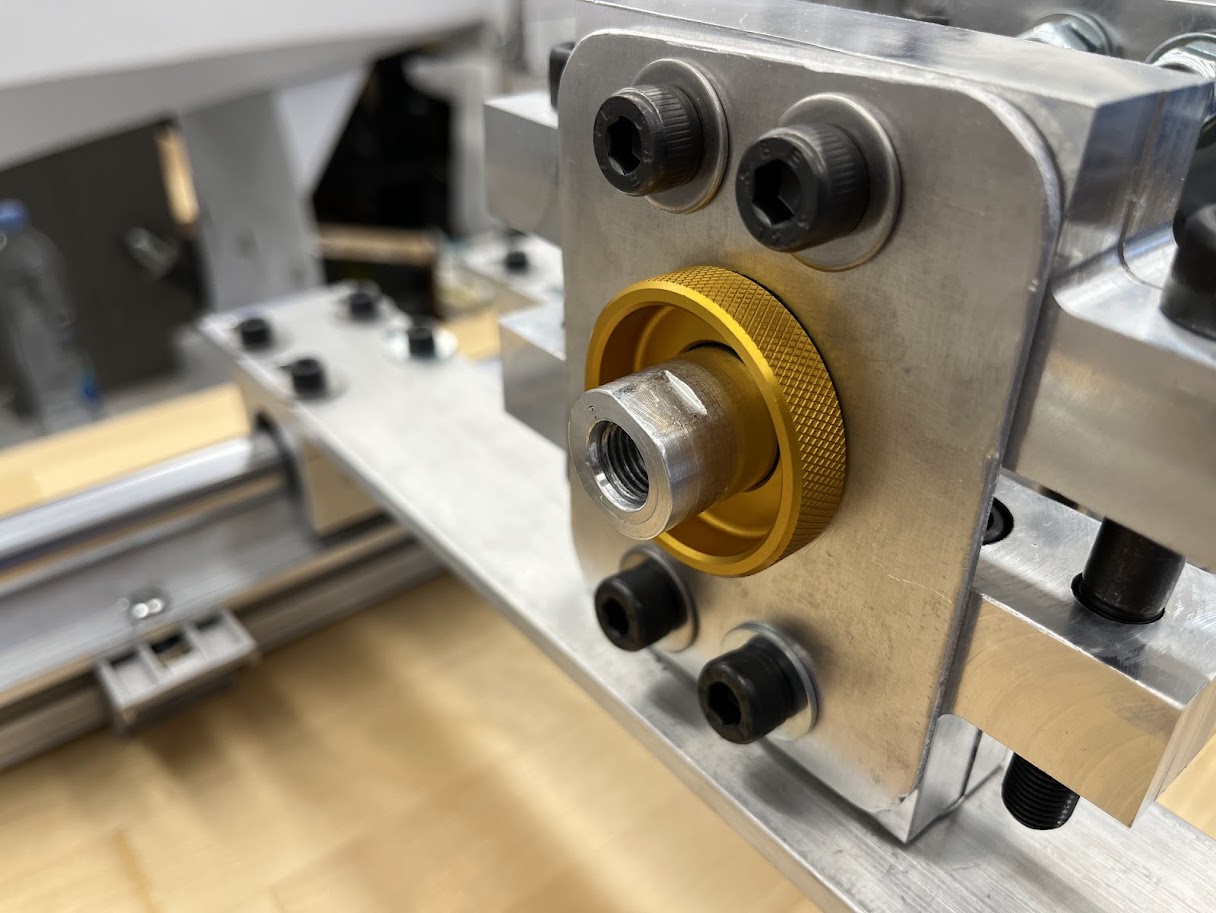
The completed and tested part was then test assembled into the forward section of the motor.
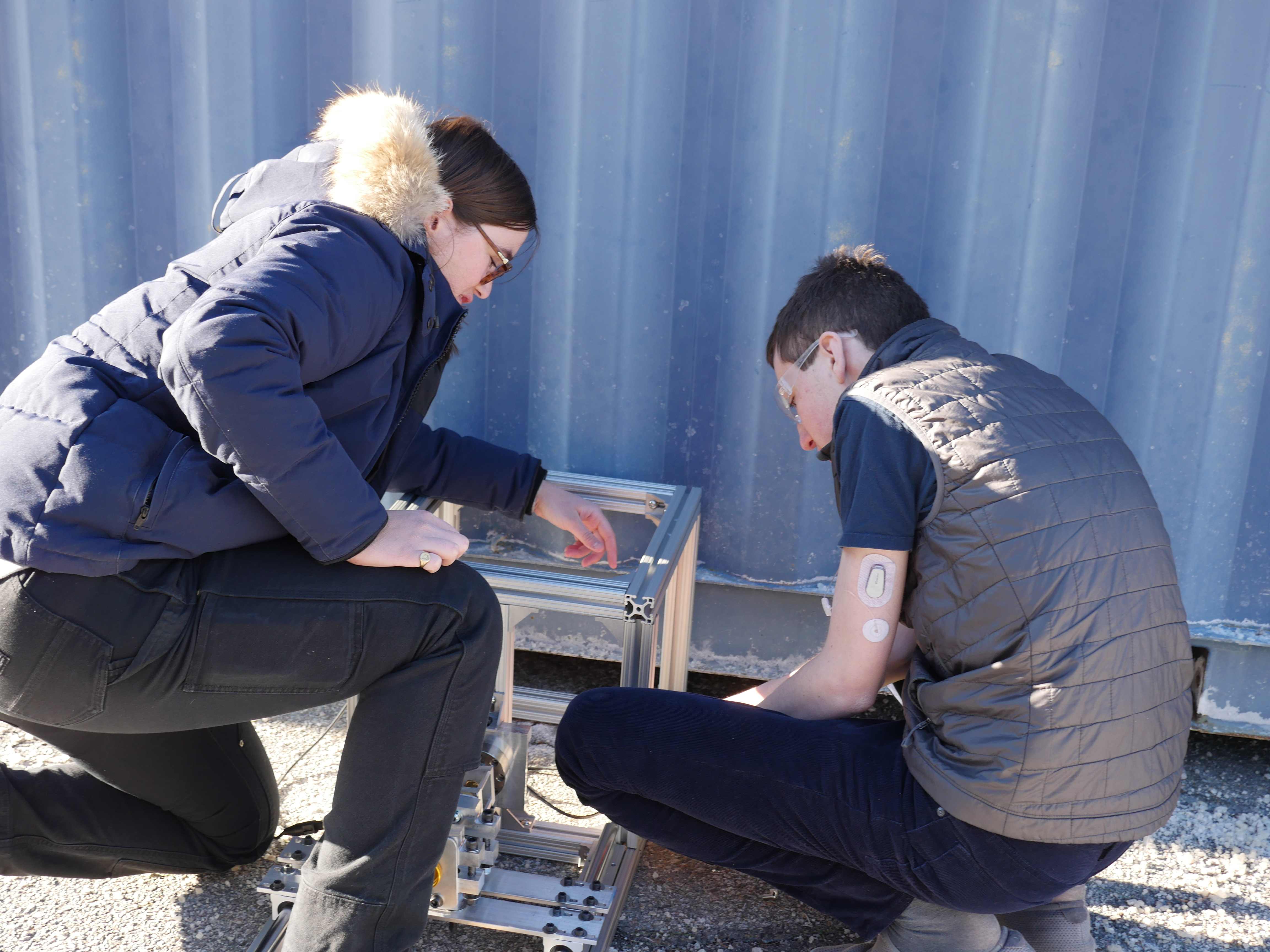
I assembled the bulkhead and solid rocket motor on the test stand ahead of our first static fire.
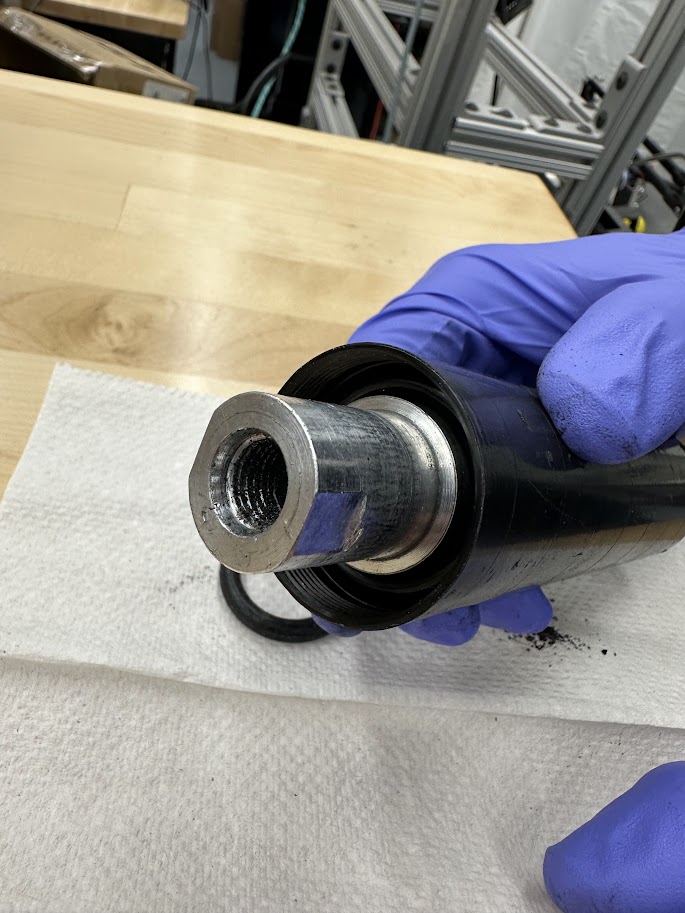
I removed the charred but intact bulkhead from the solid rocket motor casing after the successful static fire test.
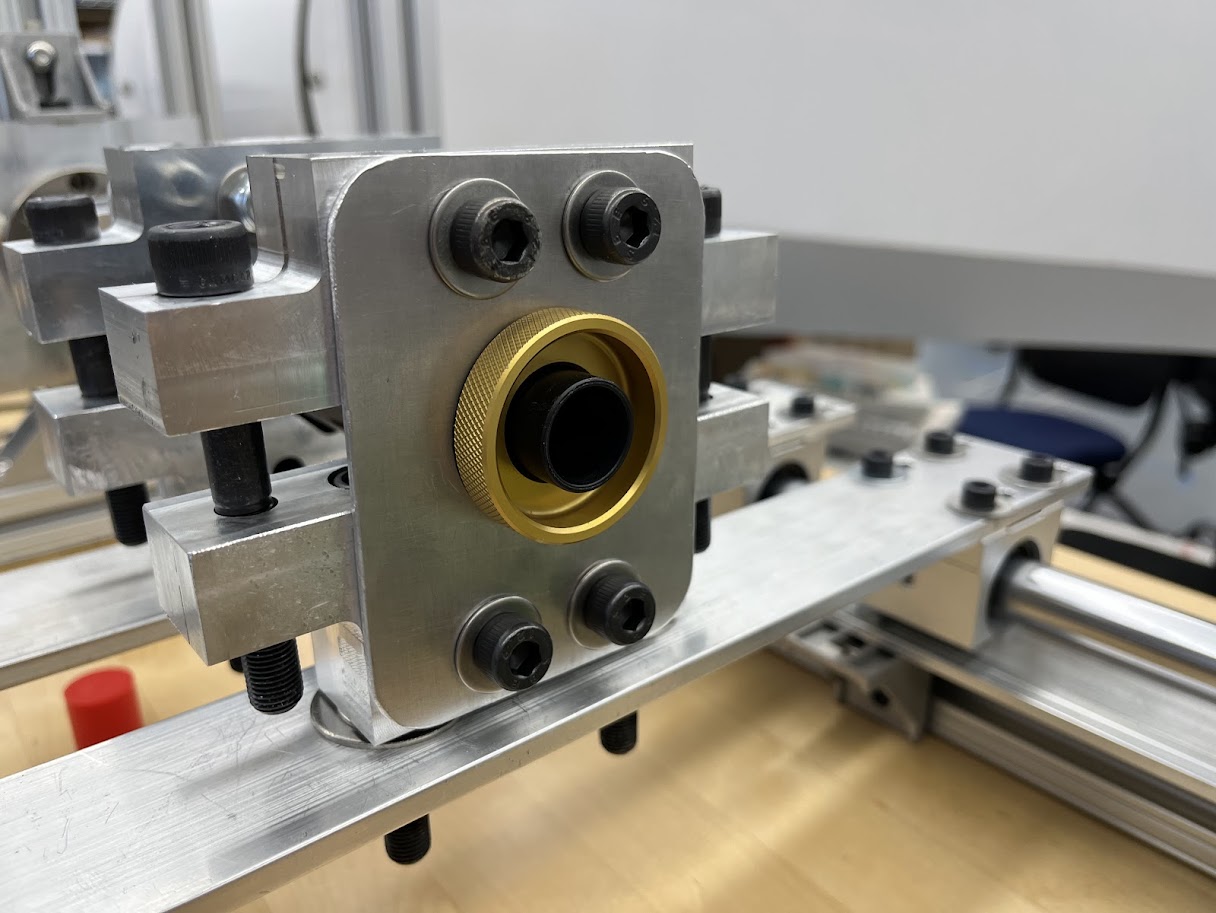
As we were test fitting all of the components onto the new motor test stand, we realized that the V-shaped clamps that hold the motor down would damage the motor casing when tightened down. We needed a way to retain the motor and have a surface for the thrust ring to push against which would allow us to not overtighten the clamps while still being secure. Although we were rushed for time, I rapidly designed a set of mounting plates that could be added to the V-clamps which would hold the motor and fit against the thrust ring. I then fabricated the parts using the plasma cutter.
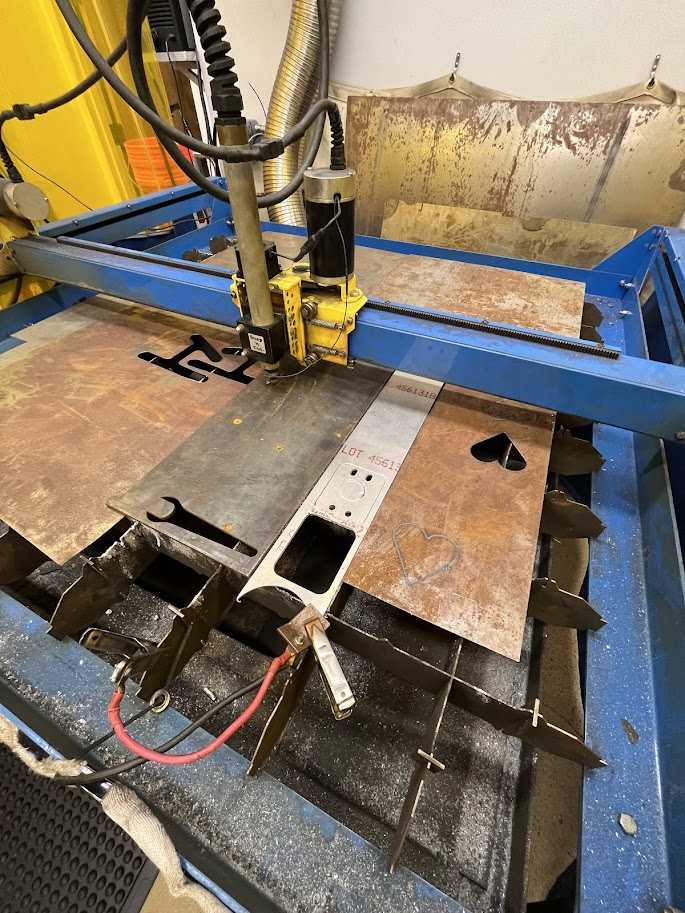
The parts required some deburring and minor filing but fit well around the casing These plates were sized for a 38mm motor but larger plates will be fabricated as we need to test our 54mm and larger motors.
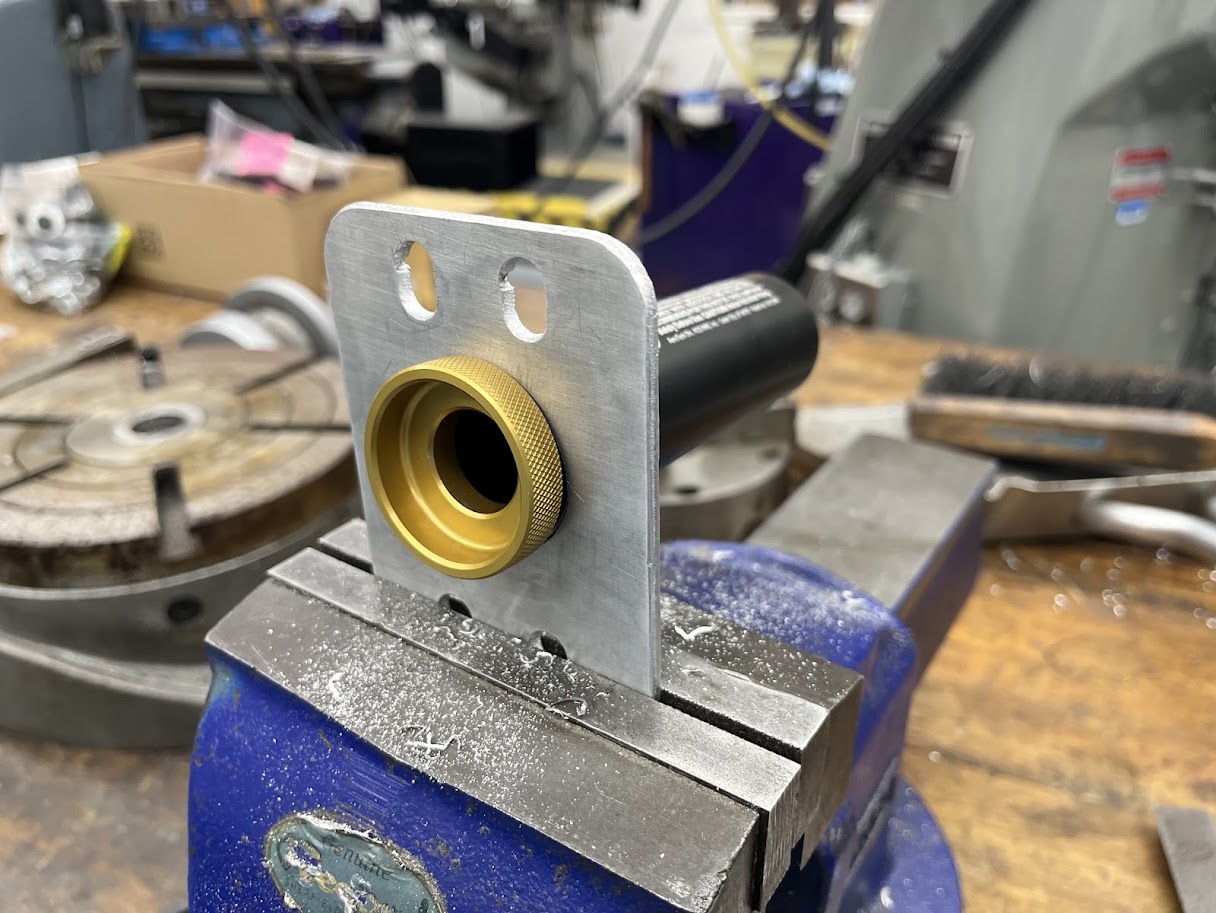
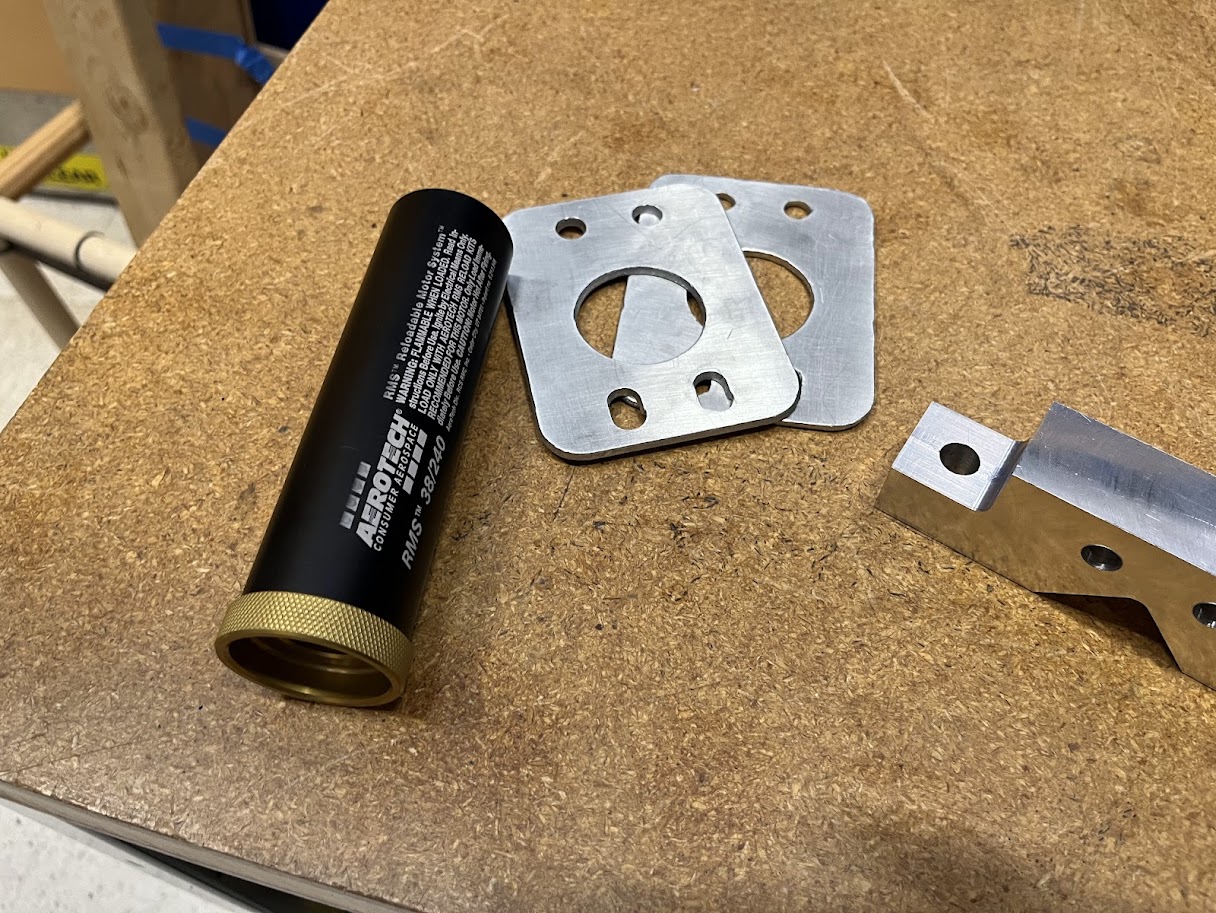
A test fit of the motor and mounting plates on the test stand. This is the nozzle end of the motor, with the thrust ring/nozzle retainer in gold with the black nozzle housed within.
While my primary role on rocketry is propulsion, I enjoy working across sub-teams and helping manufacture parts for structures. I've machined various parts using the mill, lathe, and waterjet.
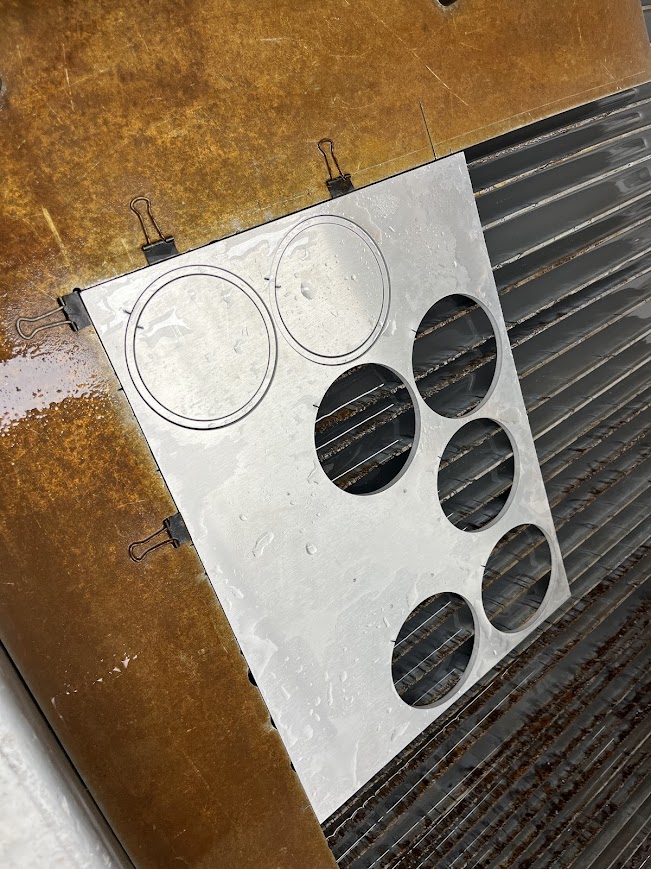
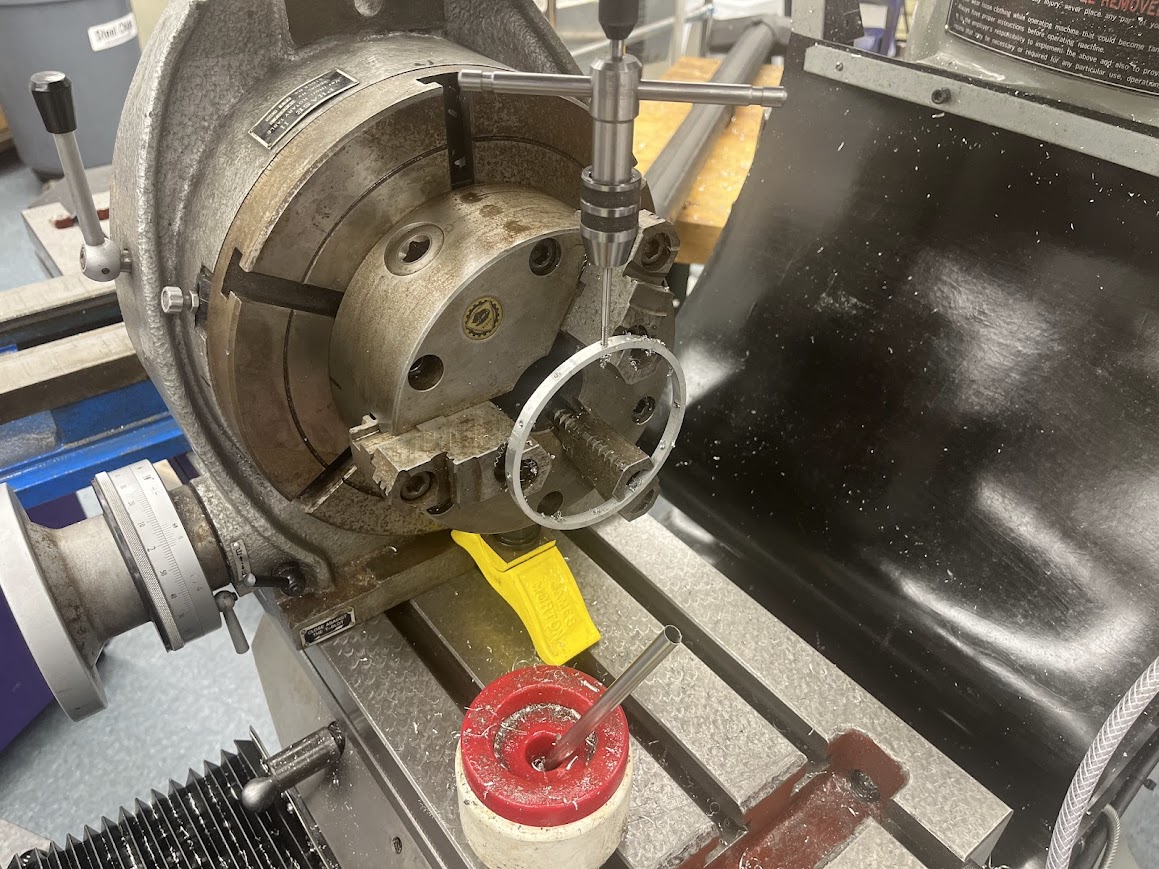
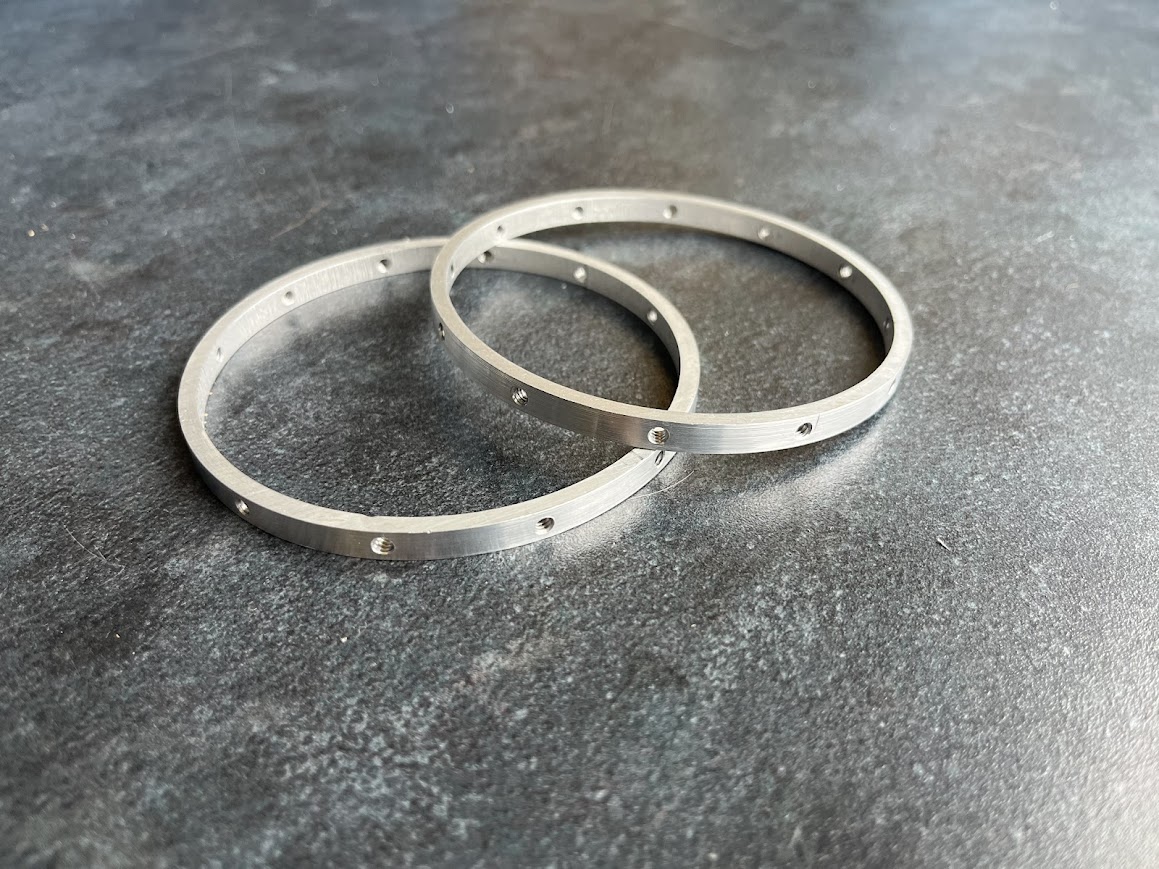
I machined a set of rings with radial tapped holes to act as nuts to mount our airbrakes section to our rocket. The single piece greatly reduces the time and effort required to attach the unit. Due to their non-standard diameter, I first used the waterjet to cut out oversized ring shapes. I then turned the rings to their final diameter on the lathe, after which I used a rotary table on a mill to drill and tap the radial hole pattern.
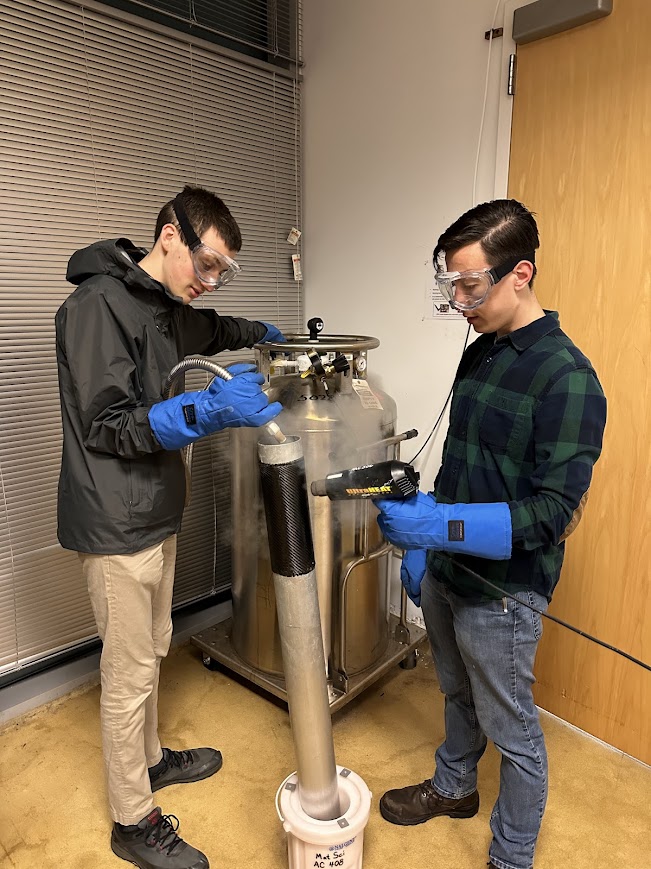
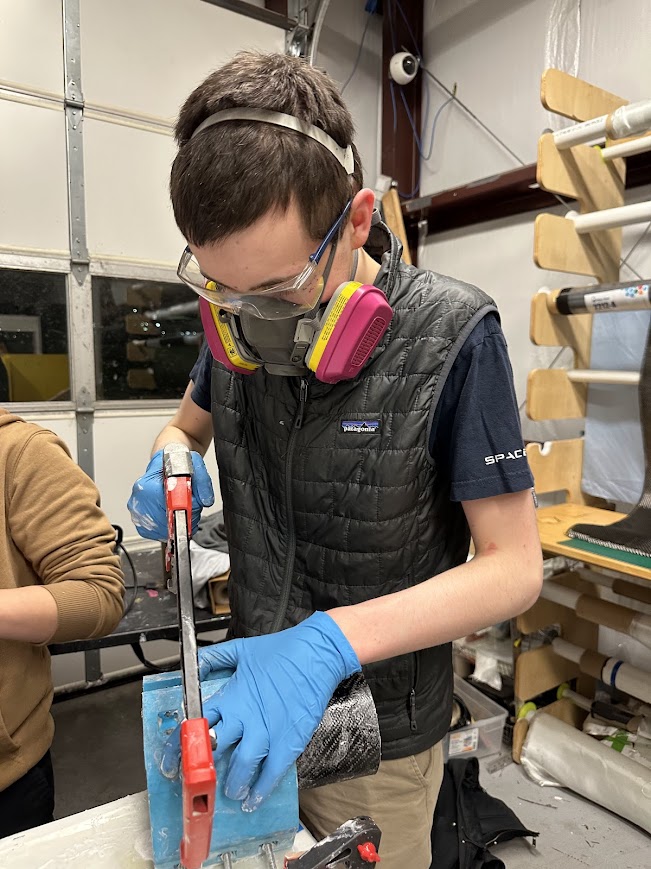
Another large portion of my work on for structures has been composites. We manufacture our carbon fiber rocket body tubes in house. This is generally done around an aluminum mandrel, which we remove by cooling the mandrel with liquid nitrogen while heating the body tube. We then trim the ends of the tube and drill mounting holes.
My current responsibility on the team is focusing on the casing and integration of our student-designed 54mm solid rocket motor. I am currently working to design the casing and forward bulkhead of the motor as well as integrate the graphite nozzle and nozzle retention mechanism into the body.
